Happy Friday, folks! I have been enjoying the cool mornings and especially the colors of fall. Now through the end of October is a great time to take it all in. Pack your kin, water and a picnic and go hiking!In our backyard, Uwharrie National Forest is very accessible along NC 109 in Montgomery County. With numerous access points to the 30+ mile long Uwharrie National Recreation Trail, you can hike for 10 minutes or all day. If you are headed to the western mountains, prepare for many folks seeking fall colors and lots of traffic. Check road closures before you go and carry a paper map. I was camping in early October and neglected to check Blue Ridge Parkway alerts, making for a long detour. However, this led us to discover the beautiful town of West Jefferson when we would have passed it heading to George Washington National Forest in southwest Virginia. What a great stop to gear up and grab a bite to eat.
Now for Flora Fridays!
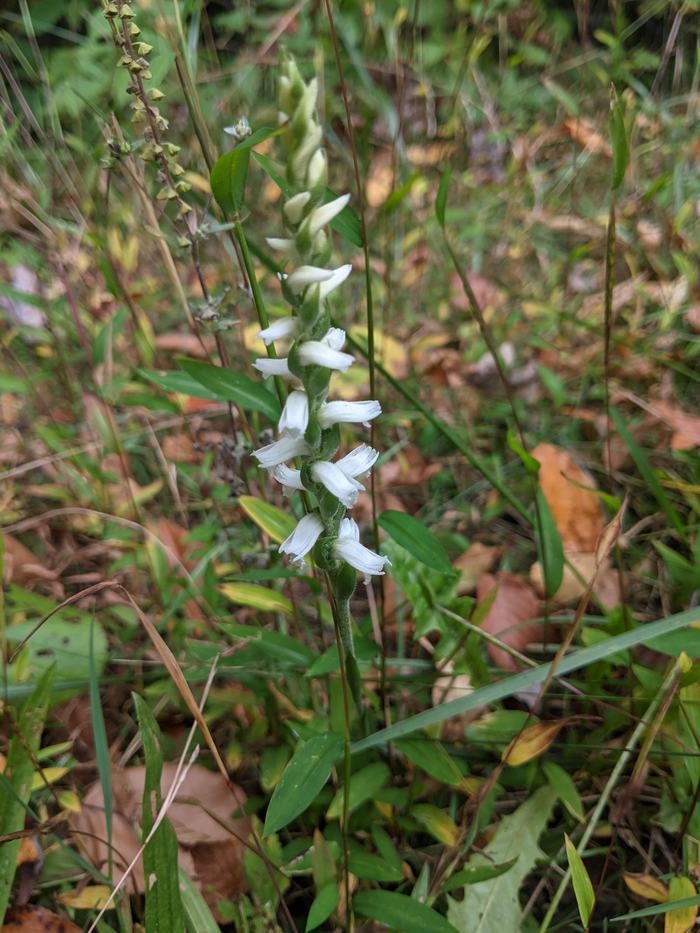
Nodding ladies tresses orchid, Spiranthes cernua
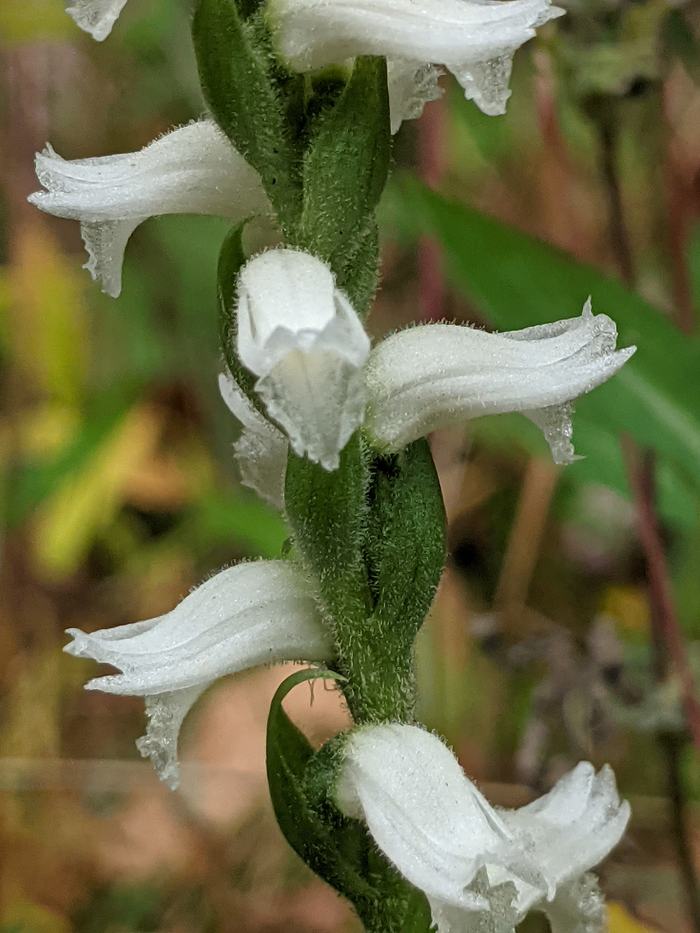
The nodding ladies tresses orchid, Spiranthes cernua, sure knows how to throw an October show! Picture this: as the hardwood tree leaves start to don their autumn hues in the Uwharries and Blue Ridges, these charming orchids in the understory start to shine. These native wildflowers begin blooming in July in the mountains, through November on the Carolina coast. Just when you thought the garden season was over, Spiranthes burst onto the scene, displaying their vanilla scented white blooms in a botanical spiral staircase.
Nodding ladies tresses orchid, Spiranthes cernua
Look for these humble orchids along the roadside in moist ditches, and in swamps and bogs. When Spiranthes populations are conserved, entire areas can be turned white by a spreading “superbloom” produced by scores of plants.
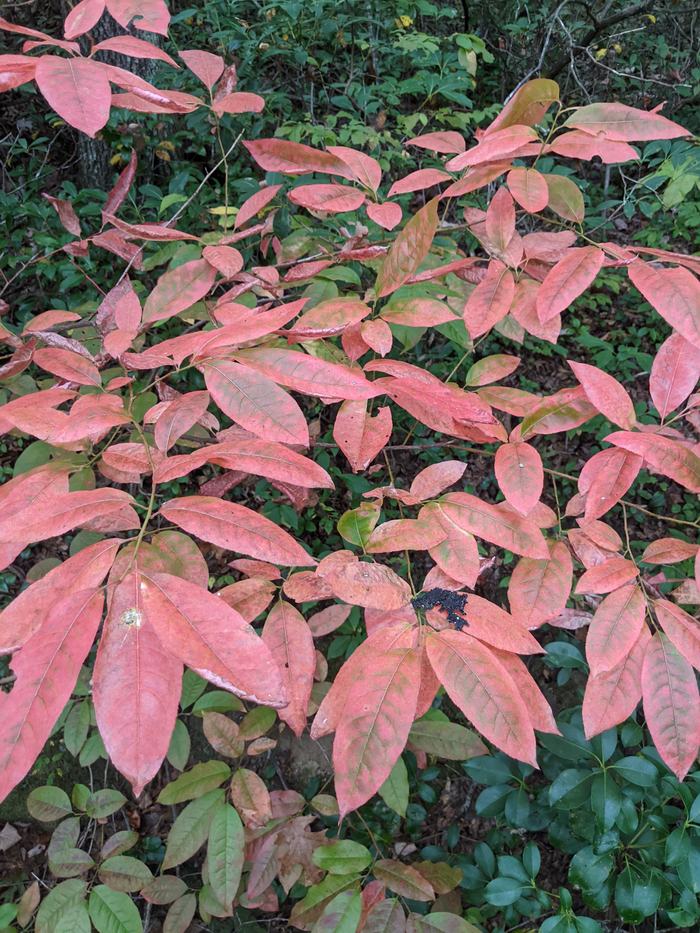
Sourwood, Oxydendron arboreum
The sourwood tree, Oxydendron arboreum, (re)takes the stage in the fall with a show-stopping performance. Its leaves turn magnificent shades of vibrant reds, the leaves looking similar to a sun illuminated pitcher of pink lemonade. This shrub to medium sized tree is in the heath family - Ericaceae - and all plants in this family put on showy colors of red, purple, and black in the fall.
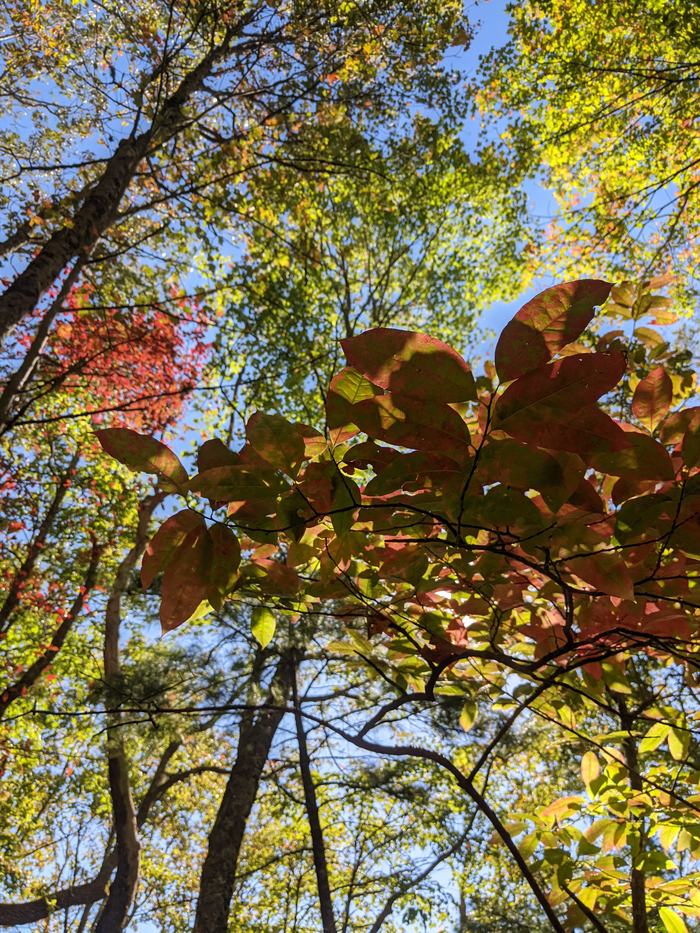
Sourwood, Oxydendron arboreum showing off in the understory. The canopy here is dominantly hardwood with some softwoods.
Ericaceous plants planted beside fall blooming asters, like yellow Solidago and plum Symphyotrichum, produce a native pairing that POPs when many other plants have senesced for the season. Prior to their fall display, sourwood trees benefit many pollinators during the summer months such as bees, flies, beetles, and other winged insects. Have you ever tasted sourwood honey? Don’t be fooled by faux honey! To source authentic sourwood honey, get in touch with our local Beekeepers Association.
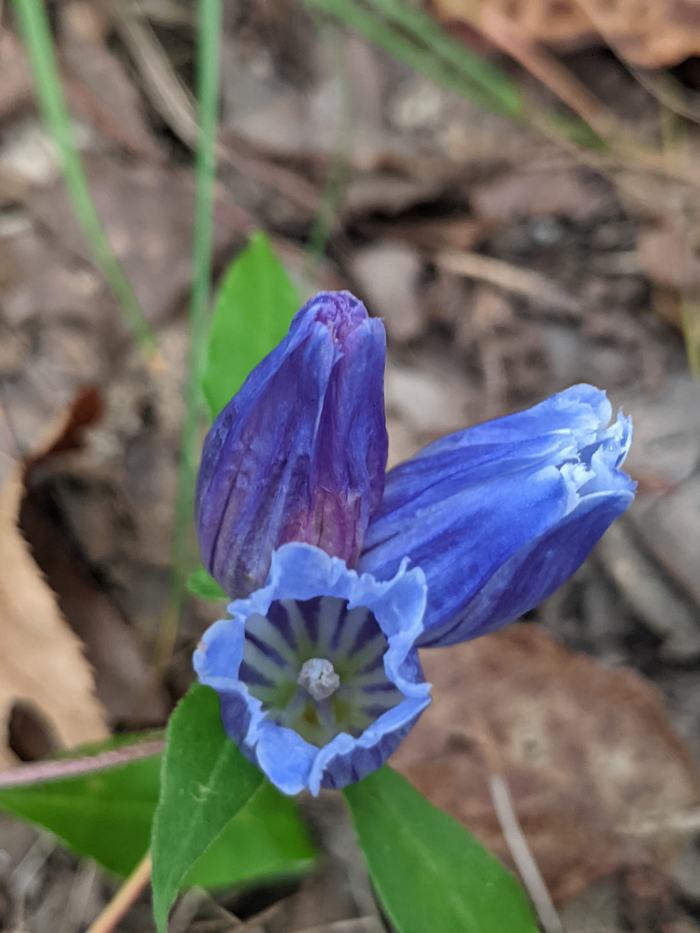
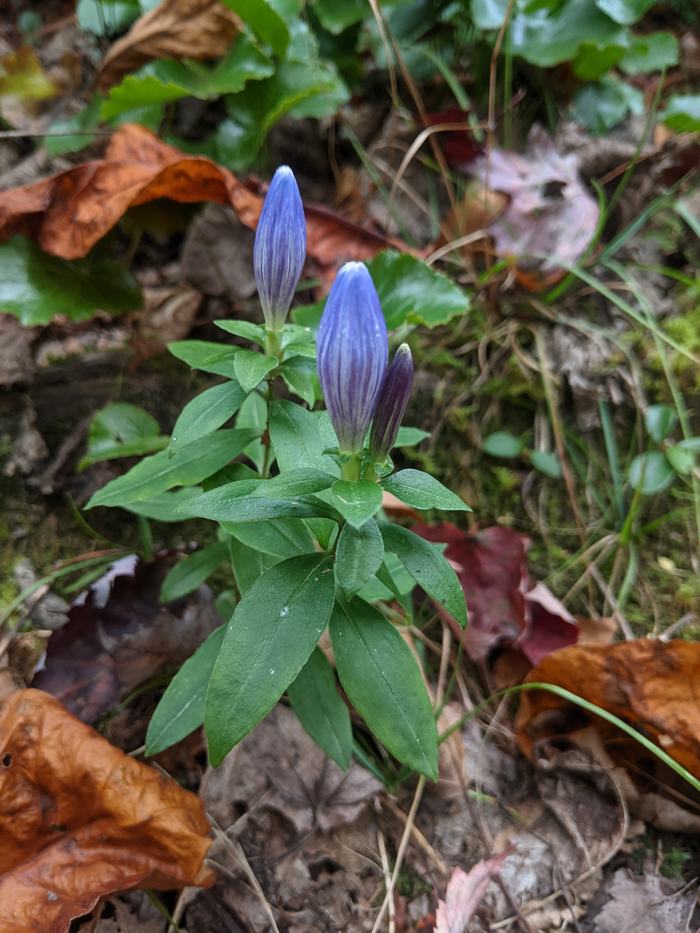
Soapwort gentian, Gentiana saponaria
Gentians, like the soapwort gentian Gentianasaponaria, don blue hues to balance out warmer fall colors. These botanical marvels know how to sneak up on hikers and landowners, gracing North Carolina forests and gardens with its enchanting blooms starting in September to November. Cultivating gentians from seed can be tricky, but with patience and the right techniques, it's certainly doable. One can also divide mature plants if you or a friend are growing them. Plant Delights Nursery south of Raleigh sells many types of quality gentians, if you would rather start with a plant.
You can read more and find detailed descriptions and photographs of these and over 4,700 plants that grow in and around North Carolina by accessing the Extension Gardener Plant Toolbox.