Good day to you, Montgomery County! Welcome to Flora Friday, November 21st, 2025. There has been a lot of evident seasonal change in the past few weeks. Much of the fall colors we enjoy have subsided, frosty nights are upon us and the days have grown short. As working adults, it can be difficult to get time outside in the daylight this time of year. Even with this challenge, it is important to our wellbeing that we make habits that expose us to natural light even if for a short time. The sunshine is beneficial to human health, and even more important to plant life. Today we share with you two plants that are persistently colorful year round. Both are common in Montgomery County landscapes and forests, and we hope this post inspires you to venture out, get some sun and seek surprisingly colorful plants during the cold season.
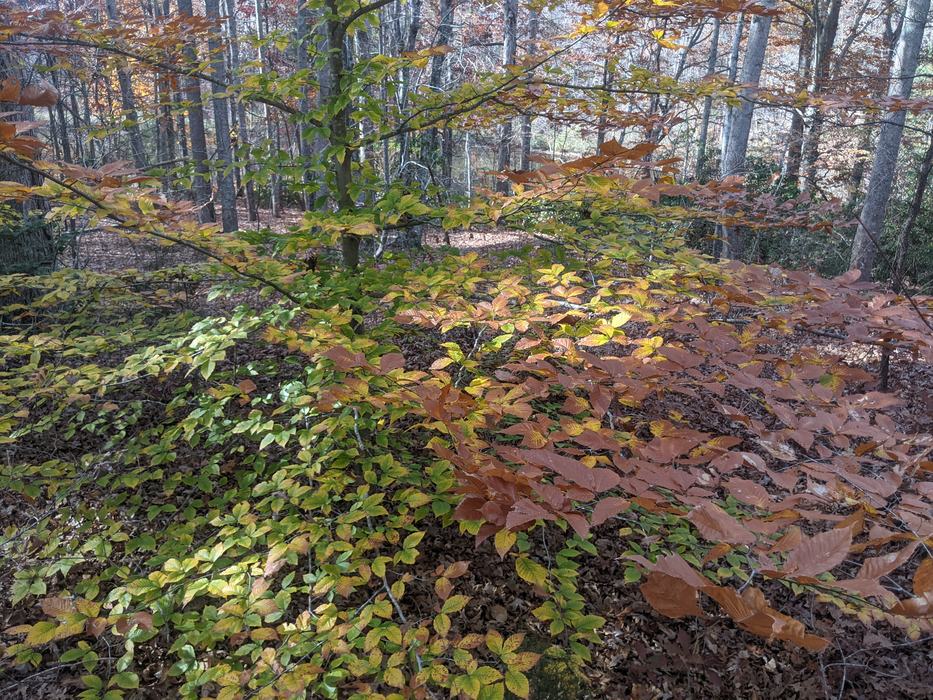
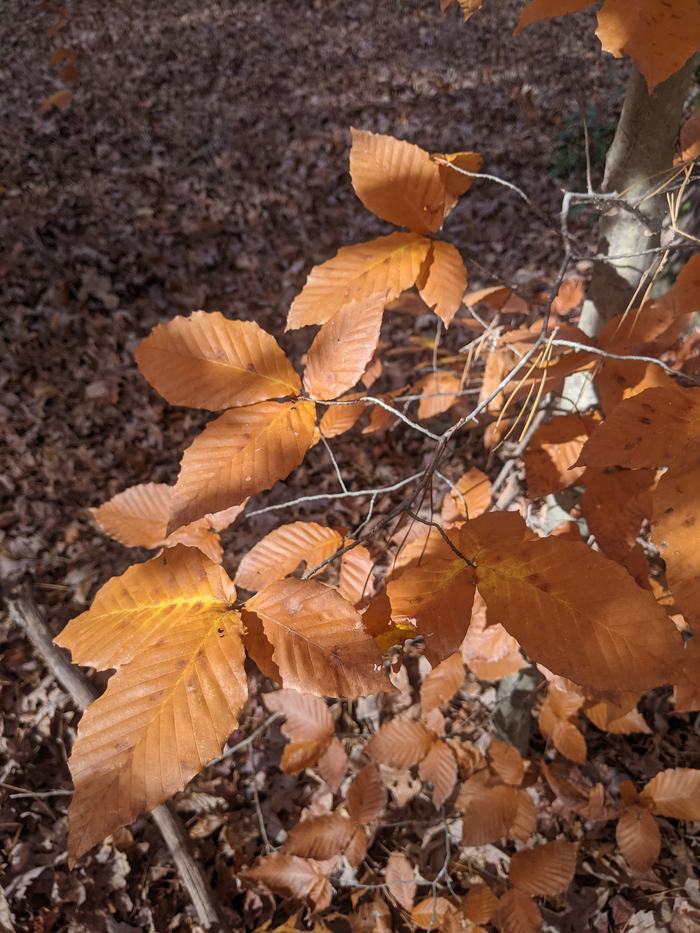
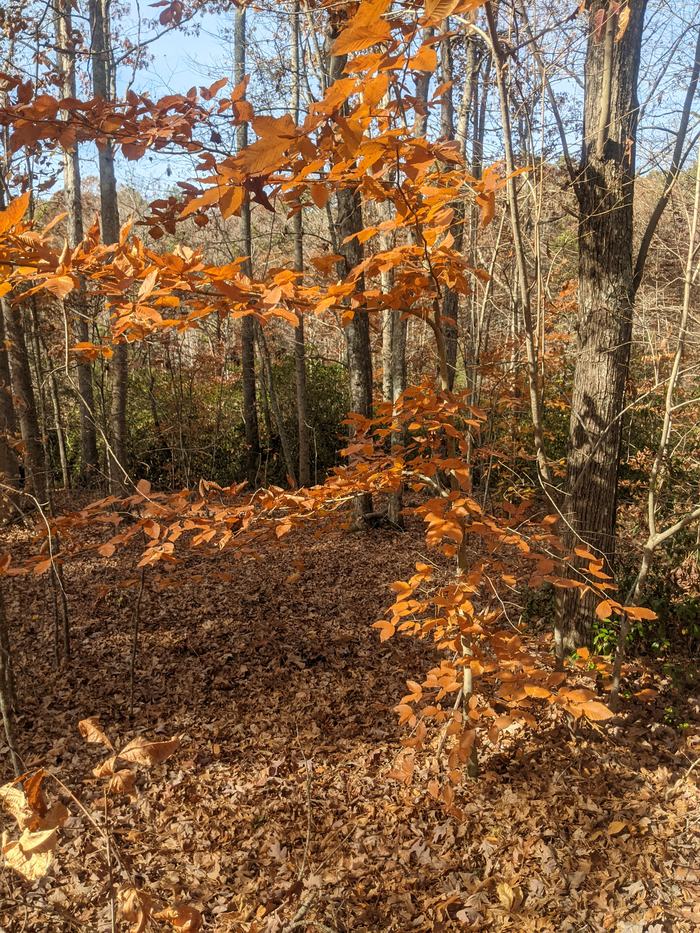
Our first featured plant is the American beech tree. If you have been following along with our Flora Friday’s, in last edition the oak trees mentioned “We don’t let our canopy get too shaggy, Like the beech trees down underneath us do”. The pictures below illustrate that point! Beech trees, or Fagus grandifolia, are native to eastern North America. In Montgomery County they can be found in rich, moist, wooded areas under the canopy; as well as in some public parks where they are great shade trees. You can identify them by a few key features, like their smooth gray bark. Large beech trunks are often carved into by forest goers. This practice is strongly discouraged and damages the tree, however it can be a key identifying feature. Beech leaves are distinctively elliptical with toothed margins, emerging dark green in the spring and changing into brilliant golds and reds come fall. These leaves often fade to tan and white in the winter, persisting on branches when many other tree species have dropped their leaves.
Colorful American beech tree, Fagus grandifolia. Leaves come on green in the spring, and turn yellow then red-bronze in the fall.
Here we highlight the persistent golden American beech leaves in the fall. This beech can be seen at Roy J. Maness Nature Preserve in Troy.
Shaggy beech leaves in the understory!
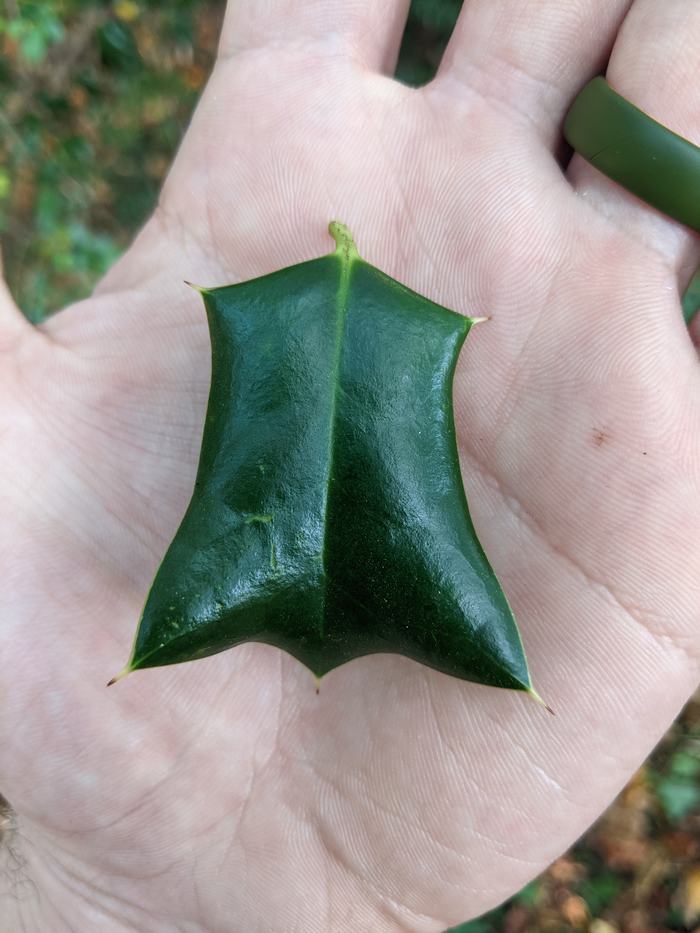
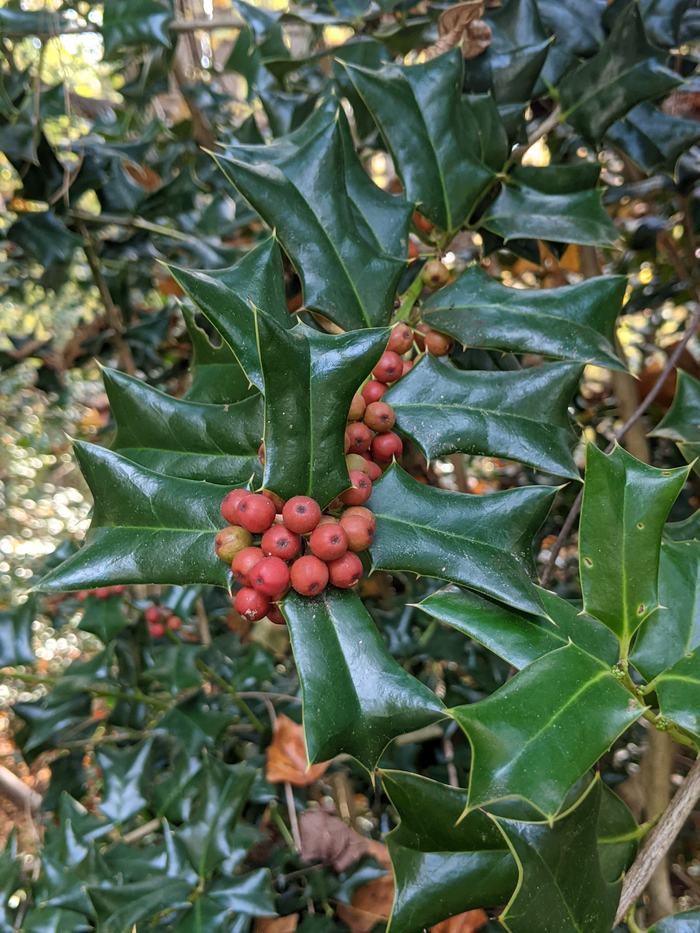
Our second featured plant is the holly. Many holly species are evergreen and have spiky leaves, great landscape choices for winter interest in deer pressured areas. There are also hollies that do not have sharp deer-deterring leaves, such as the yaupon holly, used in landscaping as trees and in foundational plantings as small shrubs. Today we wanted to feature a holly that is quite common in Troy - the horned holly, Ilex cornuta. It is often used as a privacy hedge, and can be trimmed and shaped up to 25 ft in height. This holly is a tough plant! The horned holly is adaptable to most soils that have good drainage. It is resistant to drought, heat, and humidity. The sharp leaves deter pests and people alike, making a great hedge planting. The horned holly shines when it comes to their glossy, dark green leaves and red berries persisting through winter when bright colors can be tough to find in the landscape. The horned holly is dioecious, meaning you need both female plants and at least one male plant to produce berries. Holly berries are ornamental and should not be consumed. Commonly marketed horned holly cultivars include ‘Needlepoint’, ‘Rotunda’, ‘Burfordii’, and ‘Dwarf Burford’. These cultivars are listed from most spiky (‘Needlepoint’) to least. The more spikes, the better the hedge impenetrability. ‘Dwarf Burford’ is the least spiky, and this fact makes it a good candidate for cutting branches for wreaths and garland.
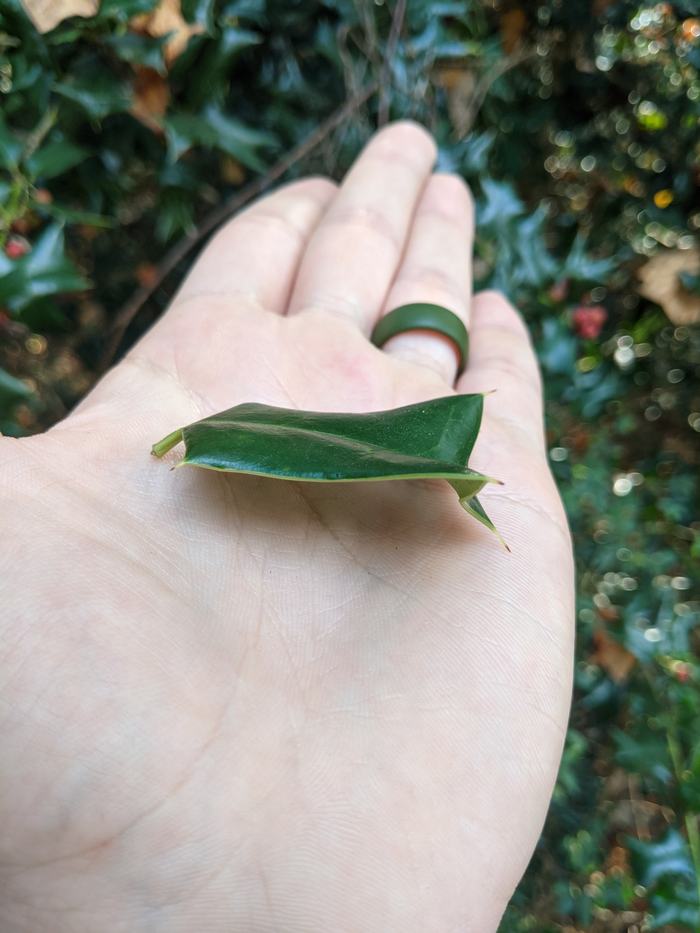
Ilex cornuta is commonly called horned holly. One explanation is the longhorn shaped leaf terminus. Not all cultivars retain this defining characteristic.
The horned holly, Ilex cornuta. This specimen can be found throughout Troy. Walking the neighborhoods, you can find hollies this time of year by their red berries and evergreen leaves. Watch out for spiky leaves!
We hope you have enjoyed this Flora Friday, and are inspired to get out and tune your eyes to showy plants with winter interest. Flora Fridays will post once per month during December, January, and February. In March 2024, we will return to regular bimonthly articles as spring kicks into gear.
N.C. Cooperative Extension Montgomery County staff wish you a quality holiday season, filled with love, gratitude, reflection, and reverence. May festivities and fellowship bring you joy. We also acknowledge holidays can be a difficult time, and welcome visitors to stop by the office so we can share and feel with you. We are here to listen to your needs with compassion and guide you to appropriate resources. If you are struggling, please do not hesitate to reach out. If this season is particularly challenging, Montgomery County has confidential crisis services available at no cost. Please view your local resources by clicking here; you have choices to reach out or have support come to you during difficult times. Other county information can be found online.
Like what we post? Please let us know by providing feedback in the box below. Check out past Flora Fridays.