The N.C. Department of Agriculture and Consumer Services (NCDA&CS) offers soil testing for both homeowners and commercial growers. Taking a soil sample is important before planting any crop because it helps the grower understand the inputs that are necessary to optimize plant growth.
The NCDA&CS offers this service for free to growers during the “off” months – typically from April to the end of November. During the busiest time of the year for soil sampling, December through March, it is a $4 charge for each sample.
The N.C. Cooperative Extension of Montgomery County office offers to have soil samples shipped to Raleigh at no cost through the help of our NCDA&CS Regional Agronomist. However, in order to ensure that samples meet the deadline to avoid a cost, it is required that community members drop off their soil samples before Thanksgiving on November 24.
Taking a soil sample may seem like a daunting task but is fairly easy once you know what to do.
Determining how and where to take the samples can be the hardest part of the whole process. Plots can be as small as a garden bed or as large as 15 acres. The biggest determining factor of when to pull a separate sample is when there is a change in soil type which may be brought on by hills, streams, or breaks. However, it is also possible to have an invisible separation, so pay attention to the soil you are working with to determine what will work best for your area.
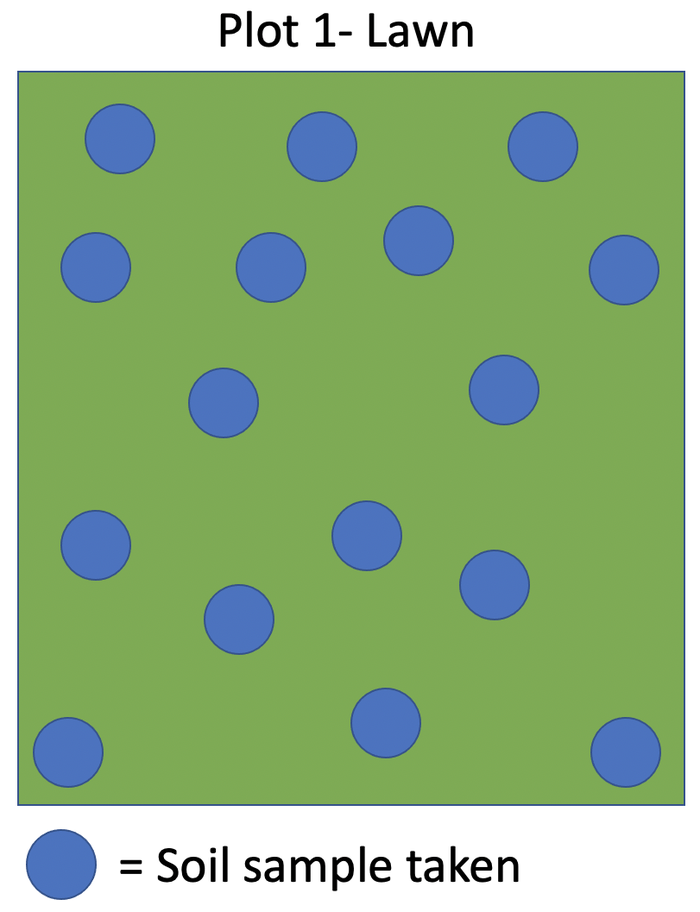
In each section, 15-20 small samples should be taken randomly across the plot, typically mimicking a diagonal pattern to achieve the most coverage. These samples can then be mixed together to better represent the complexion of an entire area.
Using a soil probe is the easiest way to obtain uniform samples (and is available to check out from the Montgomery County office) but a shovel can also be used. Samples should be taken to a depth of 4-6’’ and placed into a plastic bucket to mix. Metal should be avoided to elude any type of contamination. Once the samples are adequately mixed, the soil can be poured into a soil sample box up to the red line. If the soil does not reach the line, the sample will not be processed.
Filling out the soil sample form and boxes is as simple a task as taking the soil samples themselves. Be certain to check the information that you provide as the sample results will be sent via email. The address on the form is not a mailing address but rather designates where the sample was taken (if you do not have an email address contact your local N.C. Cooperative Extension office). When determining the “Sample Identification” choose something that will be easy to remember and relate to its corresponding lot (examples include North, South, East, West; One, Two, Three, Four; Yard, Gardn, Lawn, etc.)
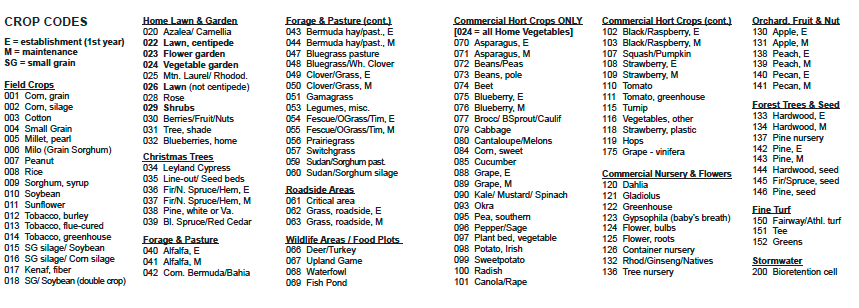
One of the most important aspects of the form is the code that goes with each sample. This is located on the back of the soil sample form. Select the code that best matches the crop you are trying to foster and correspond it with the sample ID that represents the area the crop will go into.
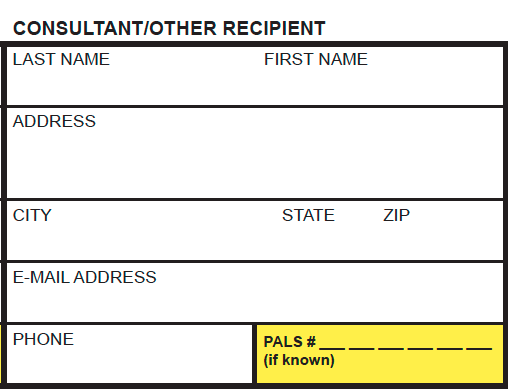
The consultant/other recipient section on the form allows the grower to include another person that will receive the soil sample results. This can be your County Extension Agriculture agent or a contractor working on your landscape – whomever might need to access the results can be placed in this section.
If you have any questions on taking or submitting a soil sample, contact your local N.C. Cooperative Extension Agriculture agent.